
News
Press releases, media coverage, public announcements, and major milestones from the VENUS program.
-
2026-08-06
Director's Discretionary Program Approved: Setting the Clock for a Lensed Supernova Beyond z=2
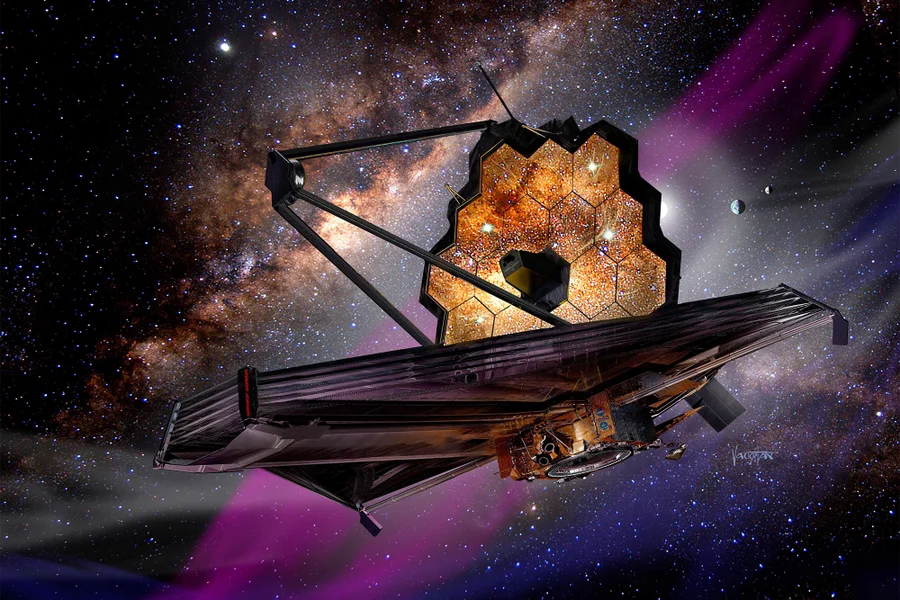
JWST Director's Discretionary Time program 12782 (PI: S. Fujimoto) was approved to observe a supernova at z~3-4 detected on 2026 July 3 behind the VENUS cluster RXC J0018.5+1626, magnified 10-20 times. Two independent lens models agree it is the second arrival of a multiply imaged system, with the next image due about 9-11 months later if z~4, or 2.5 years later if z~3. This is the first supernova beyond z=2 caught while its next image is still to come, so the reappearance can be scheduled before the light arrives. The program takes a NIRSpec prism spectrum and two NIRCam epochs to fix the redshift, type, and time delay for a measurement of the Hubble constant.
-
2026-07-27
Director's Discretionary Program Approved: Catching the Reappearance of SN Athena
JWST Director's Discretionary Time program 12781 (PI: M. Pascale), with VENUS team members as co-investigators, will monitor the return of SN Athena, the lensed supernova discovered by VENUS in October 2025 in the z=0.87 "question mark" galaxy, which is quintuply imaged by the cluster MACS J0417. Light-curve fitting and three new lens models predict a reappearance between mid-August 2026 and early March 2027. This joint JWST and HST program images the field on a 20-day cadence and adds NIRSpec/PRISM spectroscopy in the final visit, aiming to constrain the time delay to 1-5% and the Hubble constant to better than 8%, while blind-testing the predicted position of the returning image.
-
2026-06-25
JWST Follow-up: Precision Cosmology with the Lensed Supernova SN Atalanta
JWST Director's Discretionary Time program 12774 (PI: A. Agrawal), with VENUS team members as co-investigators, targets SN Atalanta, a multiply imaged Type IIP supernova magnified about 25 times behind the cluster SMACS J0723.3-7327. NIRSpec and NIRCam observations will secure its redshift and time delay for a measurement of the Hubble constant.
-
2026-06-14
VENUS Discovers Snake-LS1, the Brightest Microlensed Star Known at Cosmological Distance
On 2026 June 14, the VENUS survey discovered Snake-LS1, an exceptionally bright microlensed star in the "Cosmic Snake" arc at z=1.036 behind the cluster MACS J1206.2-0847. Magnified more than a thousandfold, it is the brightest microlensed star known at cosmological distance. JWST Director's Discretionary Time program 12775 (PI: F. Sun) obtained time-critical NIRSpec spectroscopy of this lensed red supergiant.
-
2026-03-18
VENUS 2026 Calendar Released
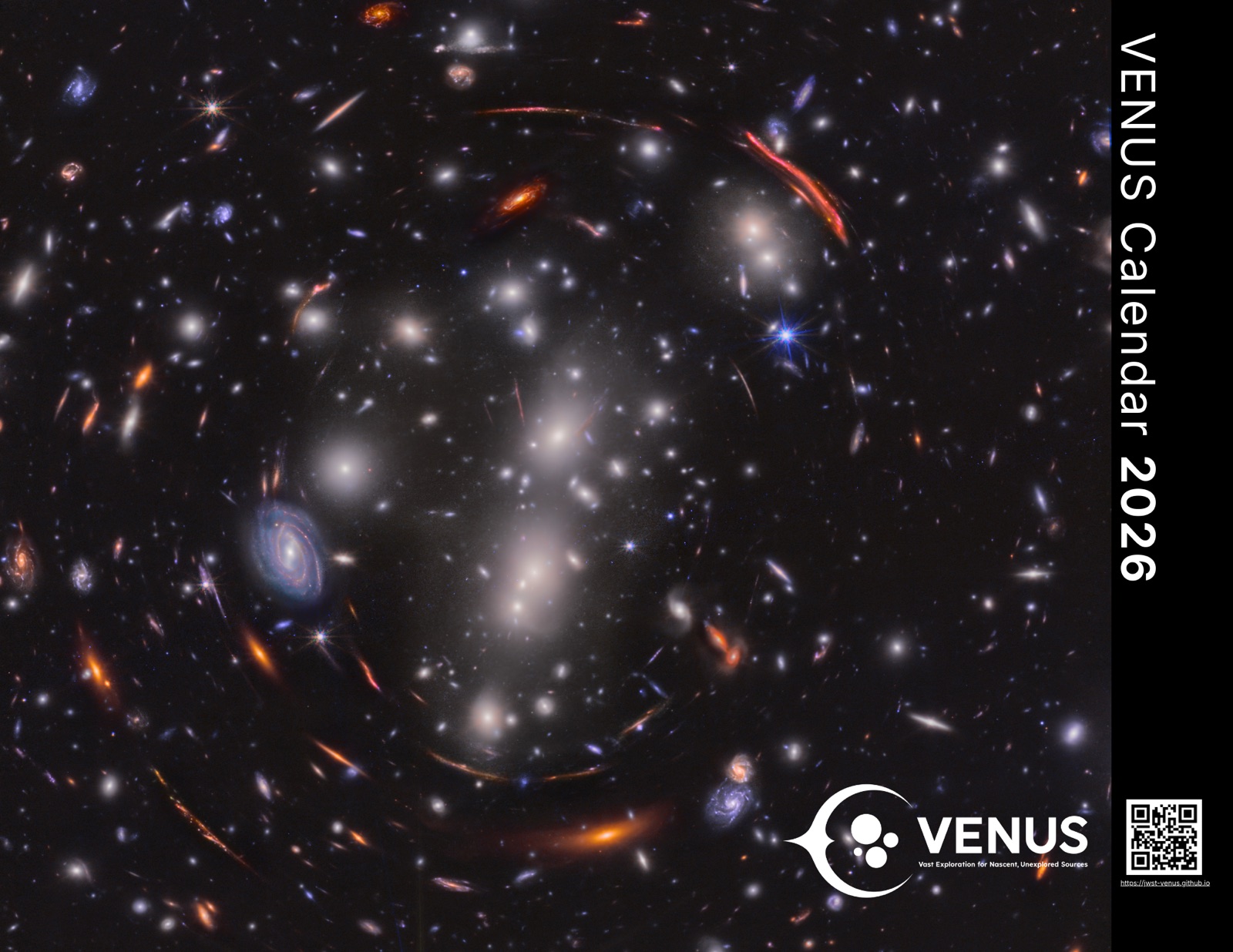
The VENUS team produced a 2026 calendar featuring JWST/NIRCam color images of the survey's gravitational lensing clusters, with a different VENUS cluster for each month. The cover shows the deep, arc-rich field of one of the program's massive clusters.
-
2026-03-10
JWST Cycle 5 Program Approved: Continued Follow-up of the Lensed Supernova SN Eos
A JWST Cycle 5 GO program (ID 12299, "Catching Eos by the Tail", PI: C. Larison) was approved to obtain NIRCam and MIRI observations of SN Eos, the strongly lensed z=5.13 Type II supernova discovered behind the VENUS cluster MACS J1931.8-2635. The roughly 29-hour program will constrain the supernova's phase, bolometric luminosity, and nickel and envelope masses.
-
2026-03-10
JWST Cycle 5 Program Approved: A 160-Year Time-Delay Monitor of Lensed Little Red Dots
A JWST Cycle 5 GO program (ID 10005, PI: F. Sun) was approved to monitor the multiply imaged little red dots behind the VENUS cluster RXCJ2211-0350. Three strongly lensed systems there produce 15 images at z=4 to 7 with time delays ranging from a few days to about 160 years, the largest such sample in any JWST cluster, enabling a test of whether little red dots vary on timescales far beyond the mission's lifetime.
-
2026-03-10
JWST Cycle 5 Program Approved: A Second Lensed Little Red Dot in Abell 383
A JWST Cycle 5 GO program (ID 10075, PI: M. Golubchik) was approved to study Abell383-QSO1, a second multiply imaged little red dot at z=6.03 found behind the VENUS cluster Abell 383. NIRSpec IFU spectroscopy will measure its black hole mass, both from the broad line width and dynamically, and probe a blue companion about 150 pc away that lensing makes resolvable.
-
2026-01-20
JWST Follow-up: Nebular-Phase Spectroscopy of the Lensed Supernova SN Typhon
JWST Director's Discretionary Time program 12503 (PI: J. Pierel), with VENUS team members as co-investigators, targets SN Typhon, a supernova triply imaged by the cluster Abell 370. A NIRSpec nebular-phase spectrum will secure its redshift for a time-delay measurement of the Hubble constant.
-
2026-01-07
Press Conference at AAS 247: VENUS Opens a New Window on Cosmic Expansion
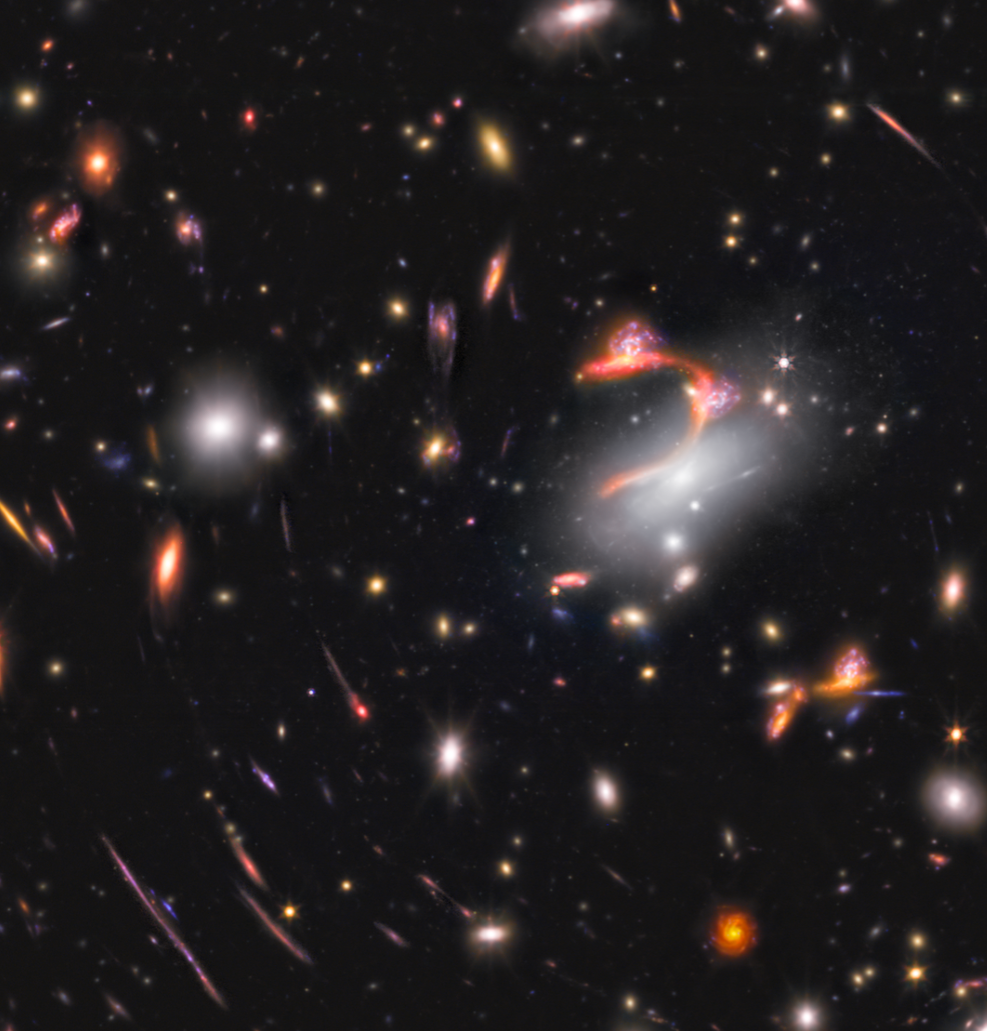
The discovery of two exceptionally rare, strongly lensed supernovae — SN Ares and SN Athena — offers a breakthrough in cosmology. With multiple images appearing years to decades apart, these events provide a unique, long-baseline experiment to probe the expansion history of the Universe and address the long-standing "Hubble Tension."
-
2026-01-06
VENUS Discovers SN Athena, a Second Strongly Lensed Supernova for Cosmology
Announced at AAS 247, SN Athena is a second strongly lensed supernova discovered by the VENUS survey. Found in October 2025 by comparing new JWST/NIRCam imaging with archival 2022 data, it exploded in the z=0.87 "question mark" galaxy, which is quintuply imaged by the cluster MACS J0417. Its lensed images are expected to reappear within the next one to two years, offering an independent, time-delay measurement of the Hubble constant.
-
2026-01-05
VENUS at AAS 247: Official 2026 Postcard Released
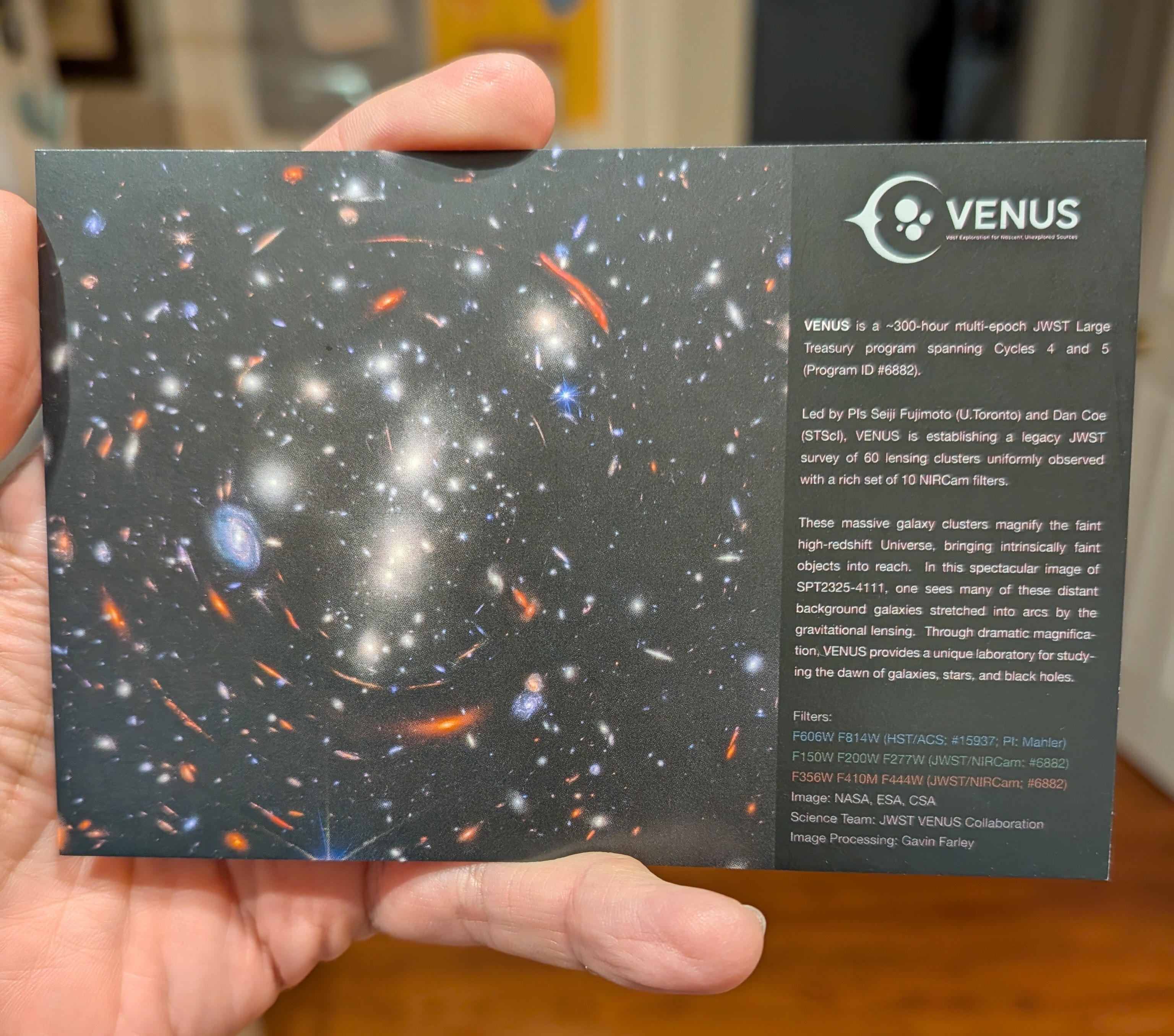
The official VENUS 2026 postcard, featuring the stunning gravitational lens system in the SPT2325 cluster, was officially released at the 247th AAS meeting. We are proud to share this visual milestone with the global astronomical community.
-
2025-11-19
First VENUS Paper: "Misty Moons" – A Strongly Lensed Clumpy Galaxy at z>11
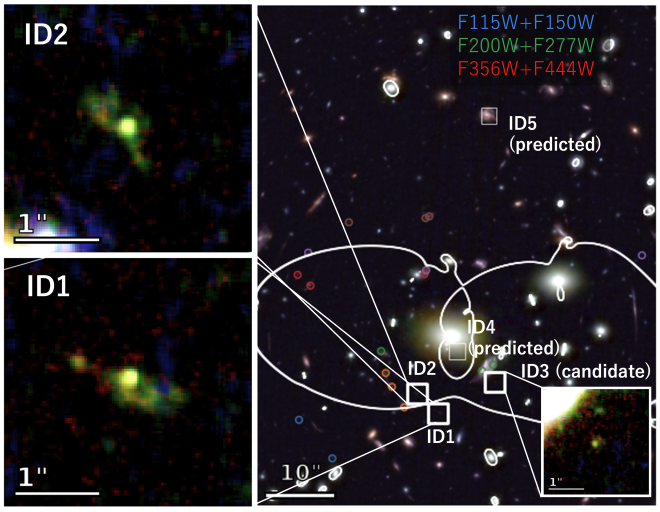
Identified by the VENUS survey, "Misty Moons" is a typical faint galaxy at z~11-12 magnified by gravitational lensing. Its resolved internal structures reveal a highly clustered mode of early star formation, unlike anything seen in the local Universe.
-
2025-10-01
Director's Discretionary Program Confirms SN Eos, the Most Distant Supernova Yet
In October 2025, JWST Director's Discretionary Time program 9493 (PI: D. Coulter) obtained NIRCam imaging and NIRSpec spectroscopy of SN Eos, a strongly lensed, multiply imaged Type II supernova at z=5.13 identified behind the VENUS cluster MACS J1931.8-2635. The spectrum confirmed it as the most distant supernova ever spectroscopically classified (Coulter et al. 2026).
-
2025-08-25
VENUS Discovers SN Ares, a Strongly Lensed Supernova at z=1.3
On 2025 August 25, the VENUS survey discovered SN Ares, a bright, strongly lensed core-collapse supernova candidate at z=1.275 behind the cluster MACS J0308.9+2645. Because spectra of core-collapse supernovae at z>1 remain rare, JWST Director's Discretionary Time program 9478 (PI: C. Larison) obtained NIRSpec and NIRCam observations of its multiple, time-delayed images.
-
2025-07-31
ALMA Cycle 12 Awarded: Systematic 2-mm Survey to Complement VENUS Clusters
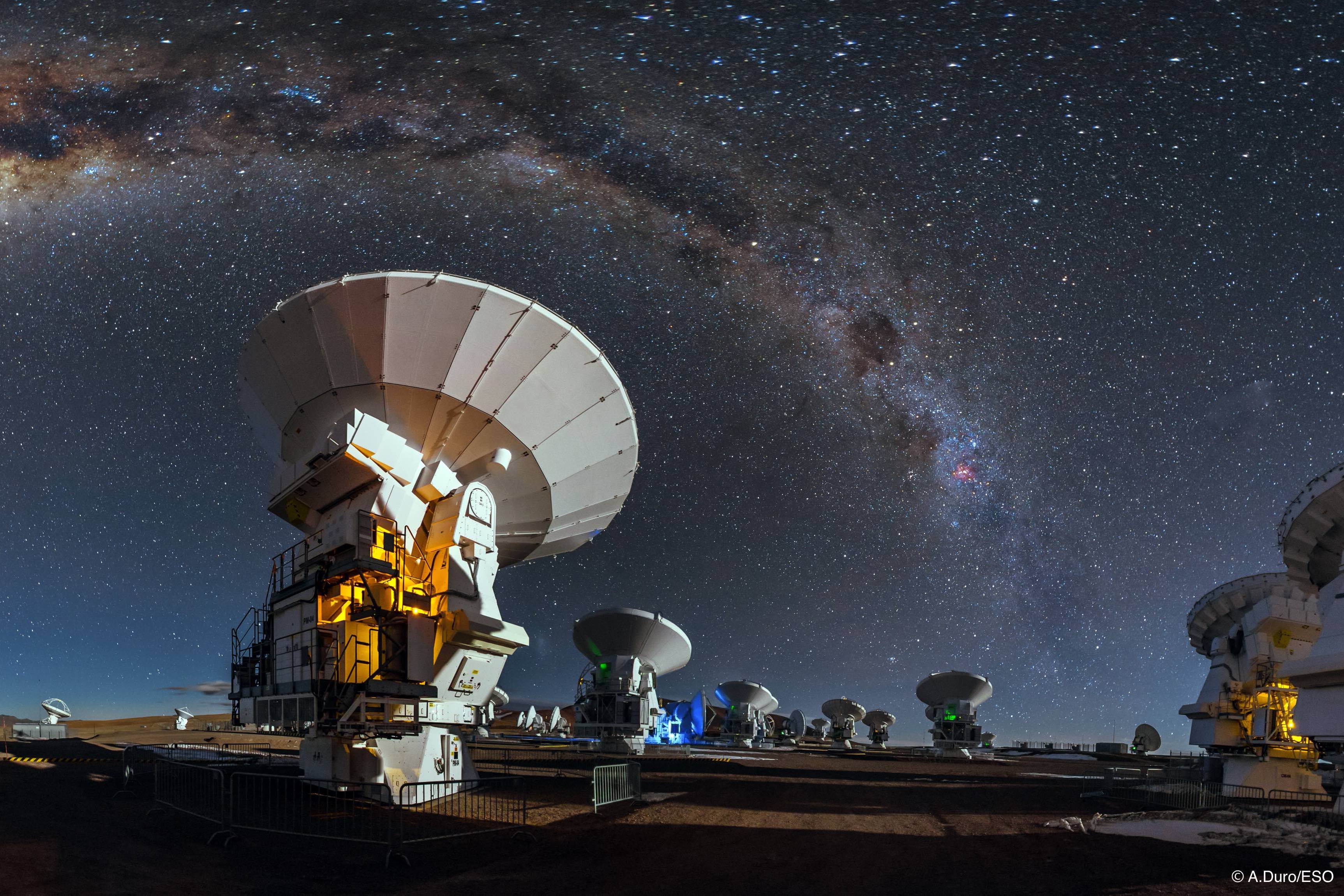
Building on the success of the ALMA Lensing Cluster Survey (ALCS) in the 1-mm band, our new systematic 2-mm mapping program for VENUS clusters has been approved for ALMA Cycle 12 (Program ID: 2025.1.00360.S, PI: F. Sun). This survey will probe the cold gas and dust in the distant Universe, providing a crucial multi-wavelength complement to the VENUS program.
-
2025-07-08
Major Milestone: First Target Cluster Successfully Observed
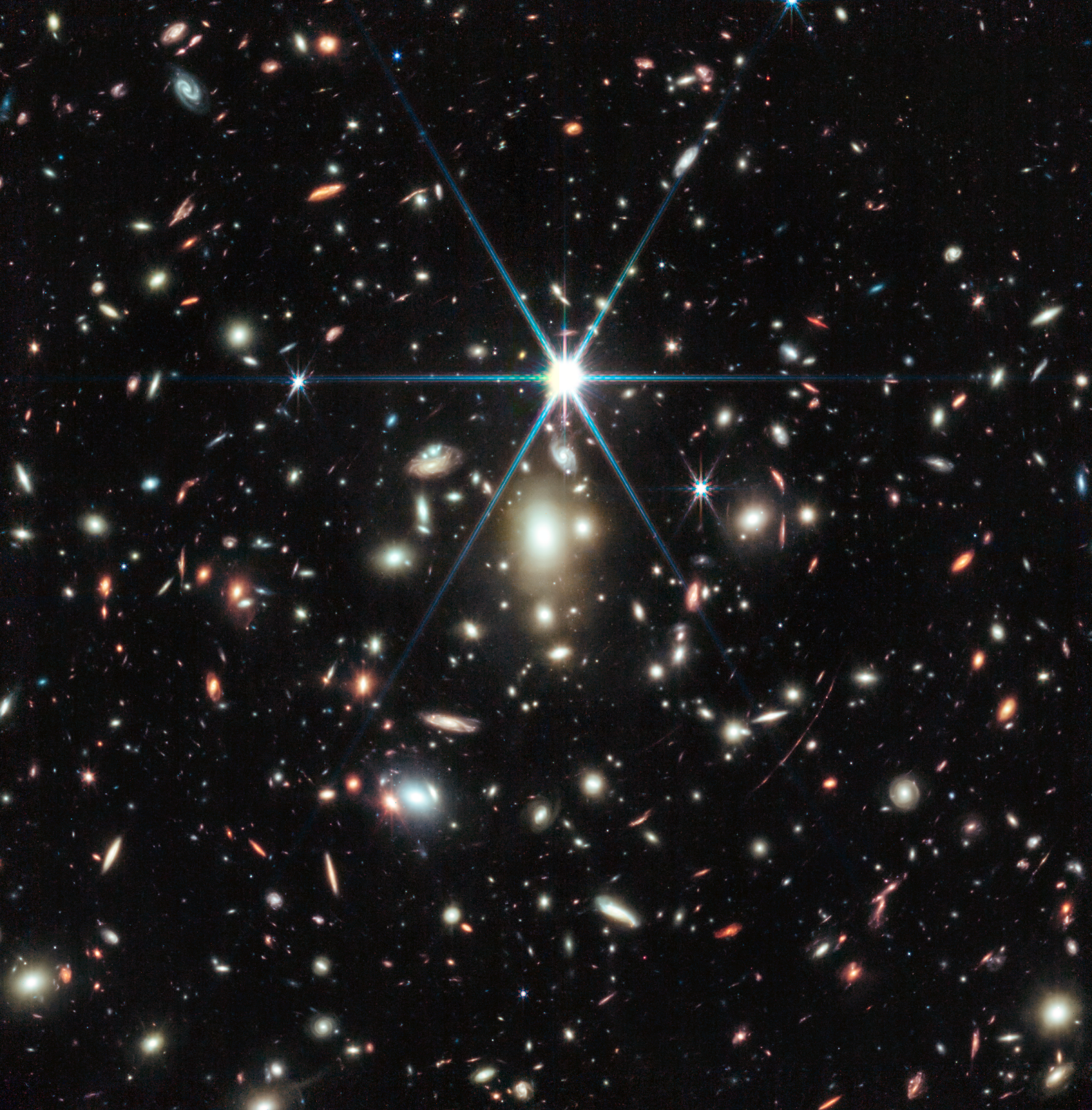
The massive galaxy cluster WHLJ013719-08284 has been successfully observed as the first target cluster for the VENUS project.
-
2025-03-11
VENUS Program Selected as JWST Cycle 4 Large Treasury Program
VENUS has been awarded 301.2 hours of observation time as a multi-epoch Large Treasury program (Program ID 6882). With allocations spanning Cycle 4 (252.2 hrs) and Cycle 5 (49.0 hrs), it stands as one of the largest JWST programs to date.